Kraków & Wieliczka
Car hire in Kraków and Kraków Airport: what to know before you rent
You do not need a car in Kraków – the Old Town is a pedestrian's city and the trams are excellent. But the moment you want the Tatras, the castles of the Eagles' Nests trail or a lakeside village on your own schedule, a rental car turns a list of day trips into a road trip.
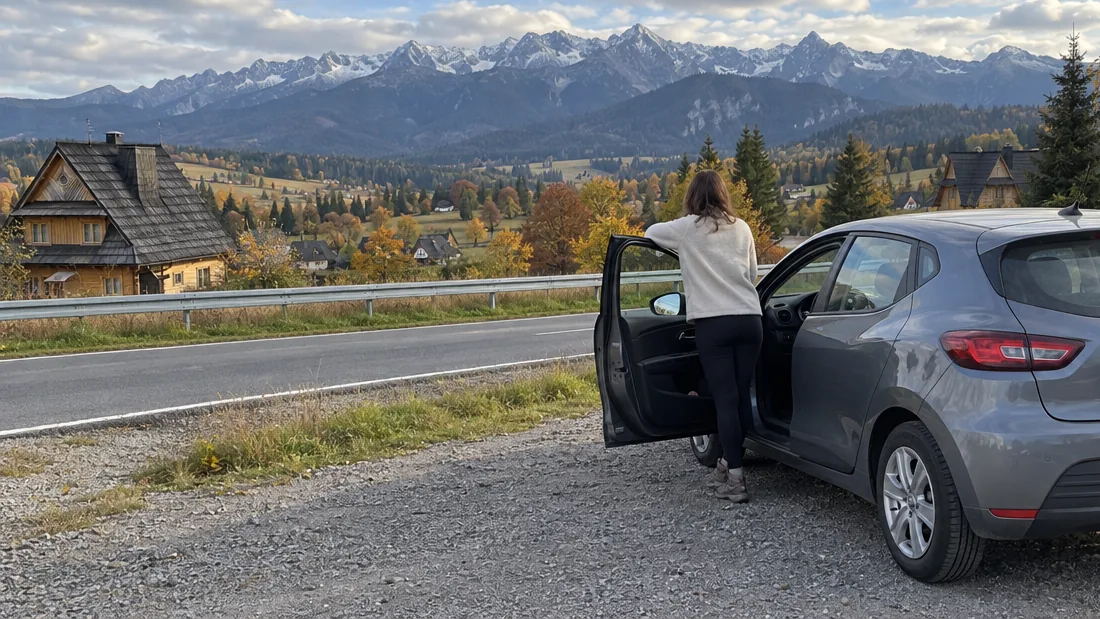
Kraków is one of the easiest places in Central Europe to rent a car. The airport at Balice has a row of rental desks a few steps from arrivals, the city has dozens of local firms that undercut the international names, and the roads out of town – the A4 motorway to Katowice and Wrocław, the expressway to Zakopane – are modern and well signposted.
What catches visitors out is not the driving but the details: a large deposit on a credit card, a cheap daily rate with an expensive insurance excess, a toll gate ten minutes out of the airport, and, since 2026, a Clean Transport Zone covering most of the city. Here is what to know before you book.
Do you need a car in Kraków?
| You are planning… | Car? |
|---|---|
| A city break: Old Town, Kazimierz, Wawel | No – walk and use trams; parking is expensive and the centre is largely closed to traffic |
| Wieliczka or Auschwitz-Birkenau | Optional – trains, buses and tours work well; a car gives flexibility |
| Zakopane and the Tatras, Ojców, Pieniny, the Eagles' Nests trail | Yes, it helps – especially for several stops in one day |
| A road trip around southern Poland, or on to Czechia or Slovakia | Yes |
A good plan for many visitors: enjoy Kraków without a car, then pick one up for the days you leave the city.
Kraków Airport or the city?
Kraków Airport (KRK, Balice) has the widest choice – international brands and local firms – and avoids driving through the city. It is the obvious option if you are heading straight for the mountains or the motorway.
City-centre and railway-station offices make sense if you only want a car for a day or two in the middle of your stay. Many local companies will also deliver a car to your hotel for a fee.
Picking up at the airport and returning in the city (or the other way round) is usually possible, sometimes for an extra charge.
What you need to rent a car
- Driving licence held for at least a year (some firms ask for two). Drivers from outside the EU may need an International Driving Permit alongside their national licence – check with the rental company.
- Passport or EU ID card.
- A credit card in the main driver's name for the deposit. Some companies accept debit cards only with their premium insurance package.
- Age: most companies rent from 21; drivers under 25 often pay a young-driver surcharge and may be limited to smaller cars.
Prices, deposits and insurance
Prices change sharply with the season: a small car in November can cost a fraction of what it does in July or over Christmas, and some local firms advertise rates from around 40 zł a day off-season. Longer rentals are cheaper per day. Compare several companies – the difference between the cheapest and the most expensive offer for the same car is often large.
The headline price is rarely the whole story:
- Deposit: a sum blocked on your credit card – often a few thousand złoty for a standard car, less if you buy extra cover.
- Insurance: third-party liability is compulsory and included. Collision cover (CDW) is usually included too, but with an excess you pay if the car is damaged. Optional “zero excess” packages reduce it, sometimes to almost nothing.
- Extras: additional drivers, child seats, cross-border travel, one-way rentals, cleaning and out-of-hours pick-up can all add to the bill.
- Fuel: choose a full-to-full policy and fill up just before you return the car.
Check the excess, the deposit and the fuel policy before you click “book” – that is where cheap offers become expensive ones.
Another option worth comparing is GetRentacar, which lists offers from local rental companies at Kraków Airport and in the city.
Driving out of Kraków: tolls and roads
- A4 Kraków–Katowice: a privately run toll motorway with two toll gates, at Balice (next to the airport) and Mysłowice. A car pays 18 zł per gate (from April 2026). Cards are accepted.
- Other motorways: the state-run sections of the A2 and A4 are free for cars, but the private A2 west of Konin and the A1 between Gdańsk and Toruń are tolled.
- Kraków–Zakopane: the S7 expressway and the Zakopianka road. It is free, but famously slow on Friday afternoons, Saturday mornings and winter weekends – leave early.
- Going abroad? Czechia, Slovakia and Austria require a vignette (an e-vignette for Czechia and Slovakia), and you need the rental company's permission to cross the border.
Driving in Kraków: the Clean Transport Zone and parking
Clean Transport Zone (Strefa Czystego Transportu). Since January 2026, most of Kraków has been a low-emission zone: petrol cars must meet at least the Euro 4 standard and diesels Euro 6, with a 500 zł fine for non-compliant vehicles. Rental cars from established companies are almost always new enough – but if you are driving your own older car, check the rules on the city's official SCT website before you go. The rules have been challenged and may change.
Parking. The centre is divided into paid parking subzones, operating Monday to Saturday, 10:00–20:00. Visitors pay around 9–11 zł an hour in the central subzone A, less further out; pay at the machine or with a parking app. The Old Town itself is largely closed to traffic, so the easiest option is to park at your hotel, in a city car park or at a park-and-ride car park at a tram terminus.
Driving in Poland: the rules that surprise visitors
- Headlights on at all times, day and night, all year.
- Alcohol limit: 0.2 per mille – effectively zero. Do not drink and drive at all.
- Speed limits: 50 km/h in built-up areas (signs mark where they start and end), 90 km/h on ordinary roads, 120 km/h on expressways and 140 km/h on motorways – unless signs say otherwise.
- Trams have priority in most situations; take extra care when they stop in the middle of the road and passengers cross to the pavement.
- Children under 150 cm must travel in a suitable child seat.
- Emergency number: 112.
Day trips where a car really helps
- Zakopane and the Tatras – combine the town with Morskie Oko or a cable car up Kasprowy Wierch, and refuel in one of Zakopane's milk bars. See our guide to Poland's national parks.
- Ojców National Park and the Eagles' Nests trail – castles on limestone crags, less than an hour from Kraków.
- The Dunajec gorge and Niedzica Castle – rafting in the morning, castle in the afternoon.
- Wieliczka Salt Mine – easy by car, though the train is just as quick.
Not driving? From the airport, the train to the centre takes about 20 minutes – see our guide to taxis and airport transfers.
Sources
- Auto Świat: A4 Katowice–Kraków toll increase (April 2026) – 18 zł per gate at Balice and Mysłowice
- Car Lease Polska: Kraków's Clean Transport Zone in practice (June 2026) – Euro 4 / Euro 6 rules, 500 zł fine
- TVN24 Kraków: New prices in Kraków's paid parking zone (August 2025) – rates by subzone, hours
- Kaizen Rent: Renting a car in Poland as a foreigner – age, documents, deposits and insurance
Prices and opening hours change – we re-check them regularly. Spotted something out of date? Let us know.