Kraków & Wieliczka
Visiting Auschwitz-Birkenau from Kraków: tickets, tours and what to expect
Auschwitz-Birkenau is not a sight. It is the place where the German Nazi regime murdered around 1.1 million people, most of them Jews, and it is now a memorial and museum visited by more than a million people a year. Going there takes planning – and a little preparation of the heart.
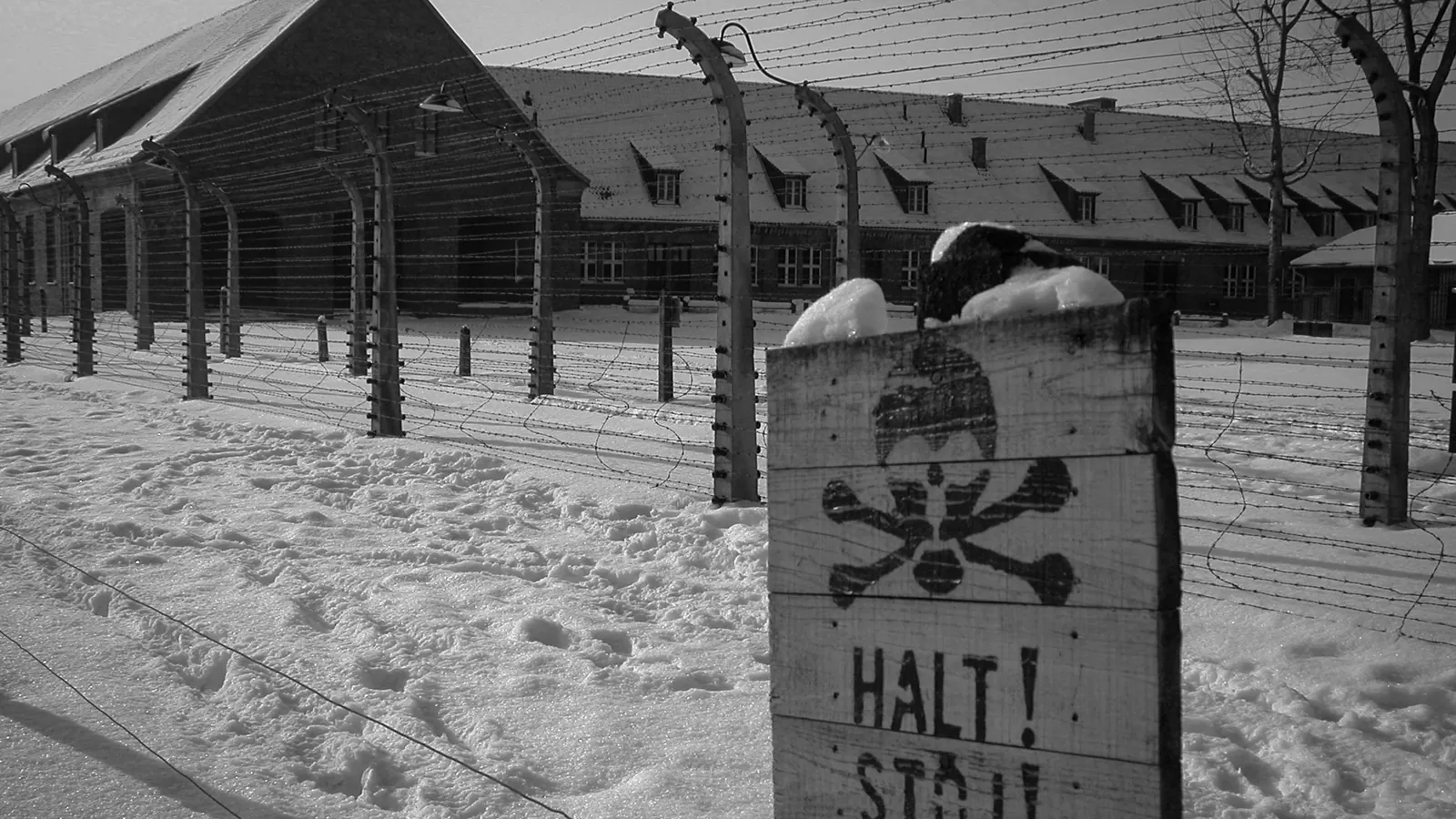
Most visitors to Kraków make the journey to Oświęcim, a small town about 70 kilometres to the west, where the German occupiers built the largest of their concentration and extermination camps. Almost everyone who goes says the same thing afterwards: that it was harder than they expected, and that they are glad they went.
This guide covers the practical side – how to get an entry pass, whether to take a guided tour, how to get there and what the rules are – so that on the day you can give the place the attention it deserves.
Auschwitz at a glance
| Where | Oświęcim, about 70 km west of Kraków |
| Two sites | Auschwitz I (the original camp and main exhibitions) and Auschwitz II-Birkenau (the vast extermination camp), about 3 km apart |
| Entry | Free, but you must book a named entry pass online in advance |
| Guided tour | Optional for individual visitors, paid; about 3.5 hours |
| Time needed | At least 90 minutes at each site; a full visit takes 3.5–4 hours plus travel |
| From Kraków | About 1.5 hours by bus or car, up to 2 hours by train |
| Closed | 1 January, 25 December and Easter Sunday |
Booking your entry pass
Entry to the Memorial is free, but every visitor needs a personal entry pass, and the number of passes for each time slot is limited.
- Book online only, on the Memorial's official booking site visit.auschwitz.org. Passes are no longer sold at the entrance.
- Booking opens up to 90 days ahead, with new dates released every day at 12:00.
- In spring and summer, free passes for popular times often go weeks in advance – book as soon as you know your dates.
- Passes are issued in your name: bring your passport or ID card.
- Arrive at least 30 minutes early for the security check.
With a guide or on your own?
A guided tour with a Memorial educator is the best way to understand what you are seeing. The general tour lasts about 3.5 hours, covers both Auschwitz I and Birkenau, and includes a headset and the shuttle bus between the two sites. Tours run in English, Polish, German, French, Italian, Spanish and other languages; there is a fee, and tickets are booked on the same official website. A longer study tour of about six hours is offered for those who want to go deeper.
Visiting on your own is free, and gives you time to move at your own pace. Read about the history beforehand, and consider buying the Memorial's guidebook at the entrance – without context, much of what you see is hard to read.
An organised tour from Kraków combines transport from your hotel, a guided visit and the ride back. It costs more than doing it yourself, but it solves the hardest part – getting a guided time slot – and is the easiest option if free passes are sold out.
How to get there from Kraków
| Time | Notes | |
|---|---|---|
| Bus or minibus | 1 h 20 min – 1 h 40 min | From the MDA bus station next to Kraków Główny; get off at Oświęcim Muzeum – not every bus stops there |
| Train | 1 h 45 min – 2 h 15 min | Kraków Główny to Oświęcim station, then a short local bus or taxi ride to the Memorial |
| Car | about 1 h 15 min | Paid car park at Auschwitz I; see our guide to car hire in Kraków |
| Private transfer | about 1 h 15 min | Door to door – a pre-booked transfer makes sense for families and small groups |
| Organised tour | full day | Transport and guide included |
Between Auschwitz I and Birkenau, a free shuttle bus runs throughout the day; the walk takes about 30–40 minutes.
Opening hours
The Memorial opens every day at 7:30. The last entry time depends on the month, and you can stay for 90 minutes after it:
| Month | Last entry |
|---|---|
| December | 14:00 |
| January, November | 15:00 |
| February | 16:00 |
| March, October | 17:00 |
| April, May, September | 18:00 |
| June – August | 19:00 |
What to expect
Auschwitz I is the original camp, set up in 1940 in former army barracks. Its brick blocks house the main exhibitions: the history of the camp, the deportations, and the personal belongings of the victims – shoes, suitcases, spectacles, and hair – which many visitors find the hardest part of the visit.
Auschwitz II-Birkenau is on a different scale entirely: rows of wooden and brick barracks stretching into the distance, the railway ramp where people were selected for death on arrival, and the ruins of the gas chambers and crematoria blown up by the Germans as they retreated at the end of the war. Much of it is open ground – in winter it is bitterly cold, in summer exposed to the sun.
Rules and respect
- Bags: only small bags are allowed – up to 35 × 25 × 15 cm. Larger bags must be left in left-luggage at the entrance or in your vehicle.
- Dress in a way appropriate to a memorial – no beachwear or clothing with offensive slogans.
- Photography without flash is allowed in most places, but not in a few rooms where signs say so. Think before you take a photo, and never pose for selfies.
- Speak quietly, follow the marked route and do not touch the exhibits or the barbed wire.
- Children: the Memorial does not recommend visits by children under 14.
- Food and drink: there are snack bars at the entrance to Auschwitz I; take water, especially in summer.
Practical tips
- Book the earliest slot you can. Mornings are quieter, and you will have the afternoon to recover.
- Do not combine it with Wieliczka on the same day if you can avoid it. Many tour companies sell both together; it is possible, but makes for a very long and emotionally heavy day. See our guide to the Wieliczka Salt Mine.
- Wear comfortable shoes – you will walk several kilometres, much of it on gravel.
- Dress for the weather. Birkenau offers almost no shelter. See weather in Poland by month.
- Leave yourself time afterwards. Many visitors want a quiet evening; Kraków's Kazimierz, the old Jewish quarter, with the Galicia Jewish Museum and Schindler's Factory, helps place the visit in the wider history of Kraków's Jewish community.
Sources
- Auschwitz-Birkenau State Museum (auschwitz.org): visiting rules, entry passes, opening hours, guided tours, bag size limit
- Auschwitz-Birkenau State Museum, booking site FAQ (visit.auschwitz.org): booking 90 days ahead from 12:00, named passes, cancellations
- In Your Pocket Kraków: Getting to Auschwitz from Kraków – bus and train
- Grand Poland: Auschwitz-Birkenau Memorial: tickets and how to get there – booking tips, age recommendation
Prices and opening hours change – we re-check them regularly. Spotted something out of date? Let us know.