Kraków & Wieliczka
Zakopane and Morskie Oko from Kraków: a day trip to the Tatras
Two hours south of Kraków, the Tatras rise straight out of the foothills – Poland's only real high mountains, with a lake at their feet that every Pole has seen at least once. Here is how to get there, what has changed at Morskie Oko in 2026, and how much you can realistically see in a day.
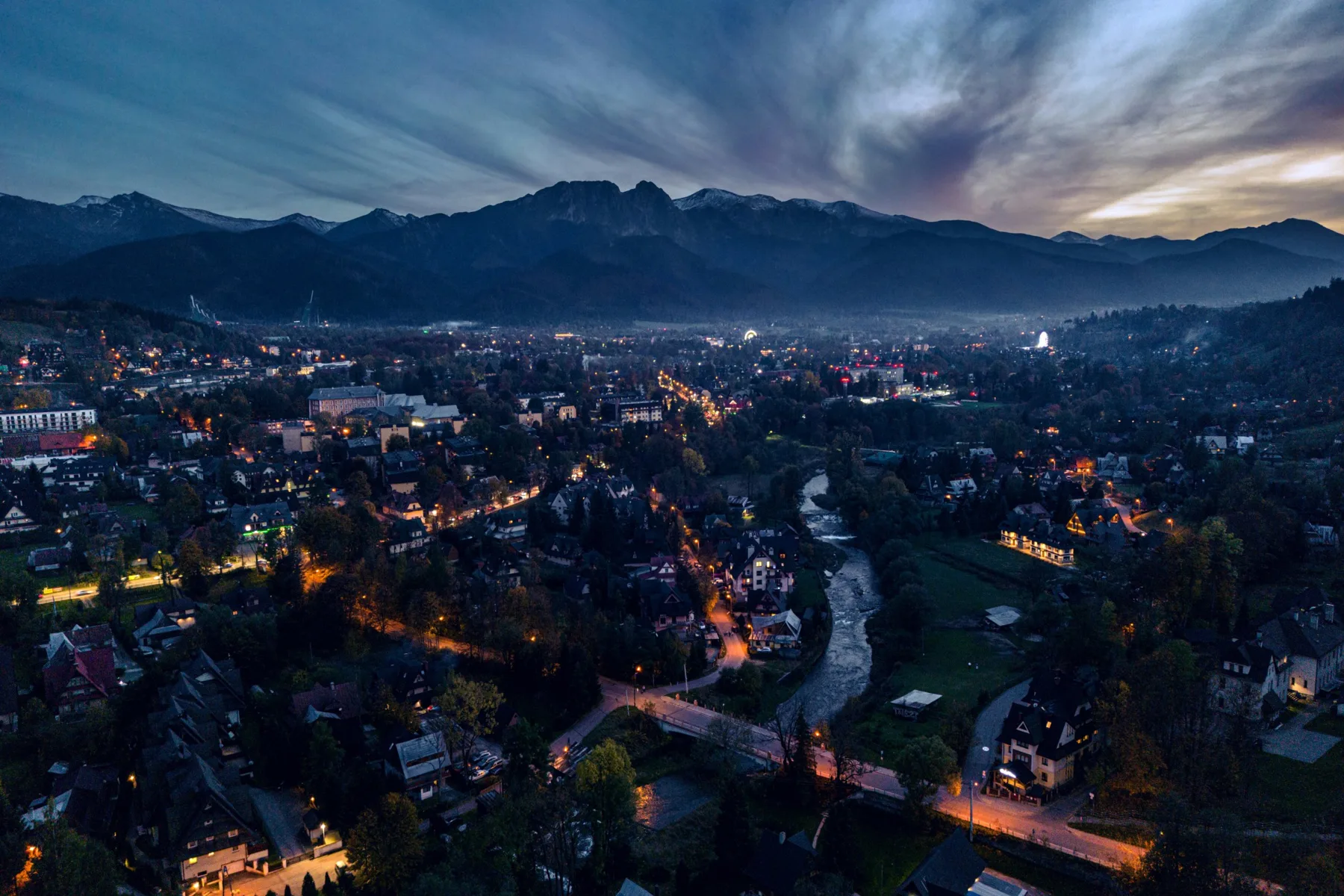
Zakopane is Poland's mountain capital: a wooden-chalet town of about 27,000 people that fills up every weekend with hikers in summer, skiers in winter and day-trippers all year round. Above it rise the Tatras, a compact granite range shared with Slovakia, and inside the Tatra National Park lies Morskie Oko – “the Eye of the Sea” – a deep glacial lake under a 1,000-metre wall of rock that is the most visited spot in the Polish mountains.
You can see both on a day trip from Kraków. You just cannot see both properly, and the logistics at Morskie Oko changed in 2026 – so it pays to plan.
Zakopane and Morskie Oko at a glance
| Distance from Kraków | About 110 km to Zakopane; Morskie Oko is another 25 km |
| By bus | About 2–2.5 hours from the MDA bus station, every 30–60 minutes |
| By train | About 2.5–3.5 hours; fewer trains, slower than the bus |
| Morskie Oko | 8 km walk each way from the Palenica Białczańska car park, or e-bus part of the way |
| Park entry | 11 zł (reduced 5.50 zł), online or at the trailhead; included in e-bus tickets |
| Best for one day | Either Zakopane town or Morskie Oko – both makes a 12-hour day |
Getting there from Kraków
| Time | Notes | |
|---|---|---|
| Bus or minibus | 2–2.5 h | From the MDA bus station next to Kraków Główny, roughly every 30–60 minutes; several companies. The quickest public option – book ahead on Friday evenings and Sunday afternoons. |
| Train | 2.5–3.5 h | From Kraków Główny; scenic but slow, with only a few direct trains a day. |
| Car | About 2 h | Via the S7 and the Zakopianka road – free, but jammed on Friday afternoons, Saturday mornings and winter weekends. See car hire in Kraków. |
| Private transfer | About 2 h | Door to door; a pre-booked transfer makes sense for families and groups. |
| Organised tour | Full day | Transport and a guide; the easiest way to reach Morskie Oko without a car. |
Leave early. Traffic into Zakopane builds through the morning, and in late autumn and winter it is dark by about 16:00.
Morskie Oko: what changed in 2026
Morskie Oko is reached on a closed asphalt road from the car park at Palenica Białczańska, near the Slovak border at Łysa Polana. Private cars cannot drive it. For decades, the choice was simple: walk the 8 km uphill or ride in a horse-drawn cart. In 2026 the Tatra National Park (TPN) started changing that.
- Horse carts (fasiągi) now run only on a shortened 2.9 km section, from Palenica Białczańska to the Wodogrzmoty Mickiewicza waterfalls, since 1 September 2026. From there you walk.
- Electric buses run by the park go further, to Włosienica, about 1.5 km below the lake, from where you walk the last stretch. Tickets must be bought online or at the TPN information point in Zakopane (ul. Chałubińskiego 44) – not from the driver – and they include park entry.
- Walking the whole way is still free apart from the park ticket, and takes most people 2–2.5 hours each way. The road climbs steadily but gently.
E-bus fares (2026 season, full price)
| Route | Fare |
|---|---|
| Zakopane → Włosienica | 89 zł |
| Palenica Białczańska → Włosienica | 69 zł |
| Włosienica → Palenica Białczańska | 58 zł |
| Włosienica → Zakopane | 78 zł |
The return is a separate ticket for a specific departure. Discounts apply for children, seniors and Large Family Card holders; children under 4 ride free. The e-buses run from spring until the end of September and do not run in winter – check the TPN website for the current season and timetable before you go.
Parking at Palenica Białczańska
The park's car park has three parts – Palenica Białczańska itself, the roadside strip and Łysa Polana, up to 1.5 km away – filled in that order. A space for a car costs 36–75 zł, depending on the date and how early you book. Book online on the TPN website: on busy days the parking sells out, and you cannot choose which part you get. Arrive before 8:00 in summer.
At the lake
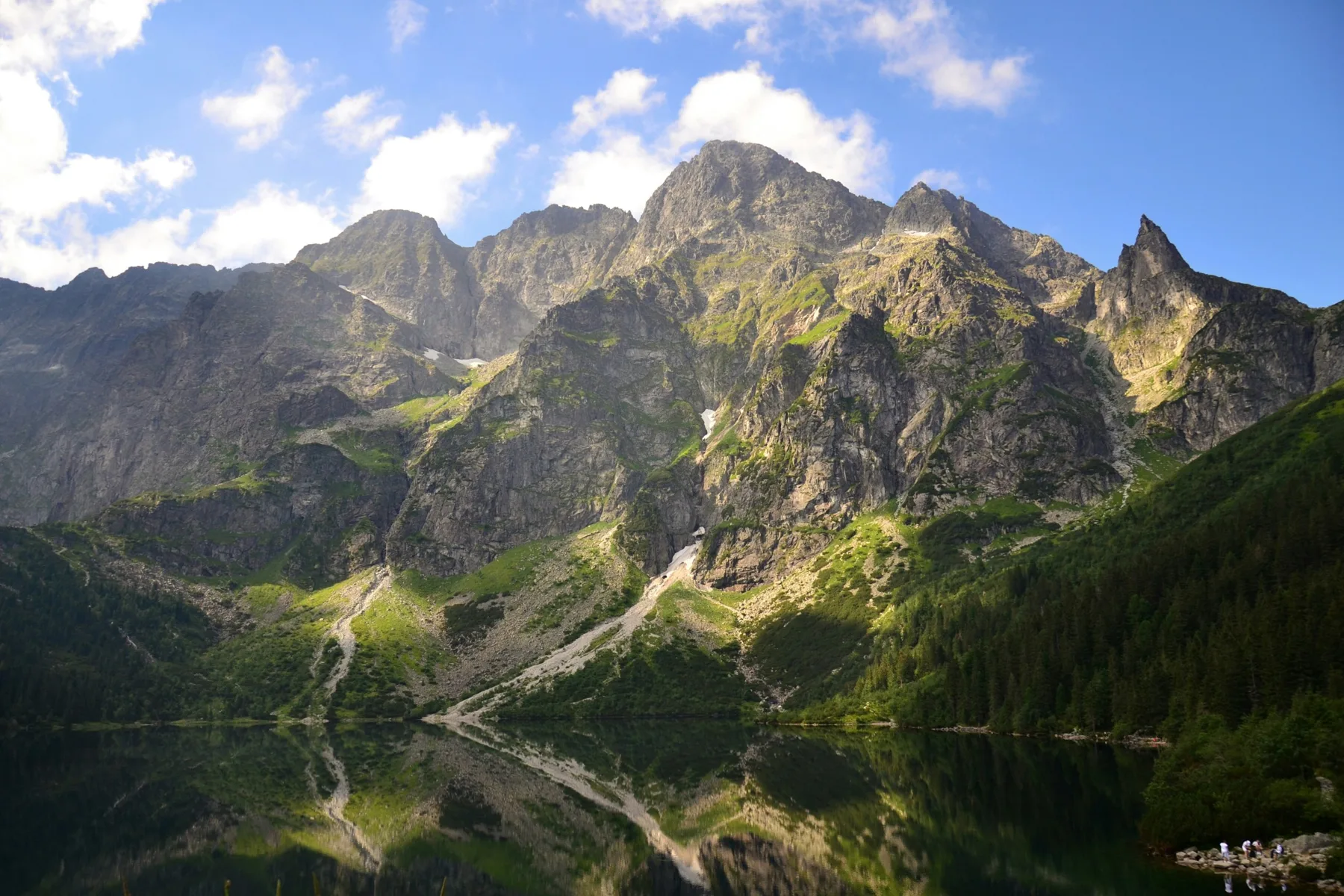
Morskie Oko lies at 1,395 metres, below the peaks of Mięguszowiecki Szczyt and Rysy, Poland's highest mountain (2,499 m). There is a historic mountain hut (schronisko) on the shore with a canteen. A path circles the lake in about an hour, and a steep trail climbs another 20–30 minutes to Czarny Staw, a second lake higher up.
Remember that you are in a national park with strict rules:
- No swimming, no paddling, no dipping your feet – it is forbidden in all Tatra lakes, and rangers do hand out fines. The water is also only a few degrees above freezing for most of the year.
- Stay on the marked paths, do not feed the animals and take your rubbish back down with you.
- Drones are not allowed without the park's permission.
Be ready for crowds. On summer weekends and holidays thousands of people walk the road every day, the hut has long queues and the shore by the hut is packed by late morning. Go early, on a weekday, or outside July and August – in September and October the lake is calmer and the light is beautiful.
If you like hiking: quieter lakes higher up
Morskie Oko is the easiest of the Tatra lakes to reach, and that is why it is so busy. If you are fit and have proper shoes, there are dozens of other glacial lakes (stawy) higher in the mountains – smaller, wilder and far less crowded:
- Czarny Staw pod Rysami – a dark lake about 200 metres above Morskie Oko, 20–30 minutes up a steep stone staircase. The quickest escape from the crowds.
- Dolina Pięciu Stawów – the Valley of the Five Lakes, one of the most beautiful places in the Tatras, about 3 hours from Palenica Białczańska via Wodogrzmoty Mickiewicza and the Roztoka valley. Fit hikers can return to Morskie Oko over the Świstówka pass and make a full-day loop.
- Czarny Staw Gąsienicowy – about 2.5 hours from Kuźnice in Zakopane through Hala Gąsienicowa, below the peak of Kościelec. Easy to combine with Kasprowy Wierch.
These are proper mountain trails: check the weather and the avalanche warning on the TPN website, set off early, carry water and layers, and in snow leave them to experienced, equipped hikers.
In winter, stay on the road and around the hut: the slopes above the lake are avalanche terrain, and the trail to Czarny Staw is for experienced, equipped hikers only. Do not walk on the frozen lake.
Zakopane in a day
If you prefer the town and an easy view of the mountains to a long walk, Zakopane fills a day on its own.
- Krupówki – the pedestrian main street: wooden houses, restaurants, highland music and plenty of tourist kitsch. At the bottom is the market where highlanders sell sheepskins, wool and the smoked cheese oscypek.
- Gubałówka – a funicular from the end of Krupówki climbs to a ridge with the best view of the whole Tatra range, stalls and a long, easy ridge walk.
- Kasprowy Wierch – a cable car from Kuźnice almost to the 1,987-metre summit, right on the Polish–Slovak border. Tickets are named and sold for specific times; buy online on the PKL website, as queues on summer weekends last hours. The cable car closes for maintenance for a few weeks a year, often in late autumn – check before you go.
- The Zakopane style – the wooden villas of architect Stanisław Witkiewicz, such as Villa Koliba (now a museum), and the tiny Old Church and cemetery on Pęksowy Brzyzek, where Polish artists and mountaineers are buried.
- Wielka Krokiew – the ski-jumping hill used for World Cup competitions.
- Coffee with a view – the café of the local weekly Tygodnik Podhalański, at ul. Kościuszki 3 near the bus and train stations, has a rooftop terrace looking straight at the Tatras. A lift takes you up; there is coffee, homemade cakes, wine and beer, and food from brunch to dinner. A good place to wait for your bus back to Kraków.
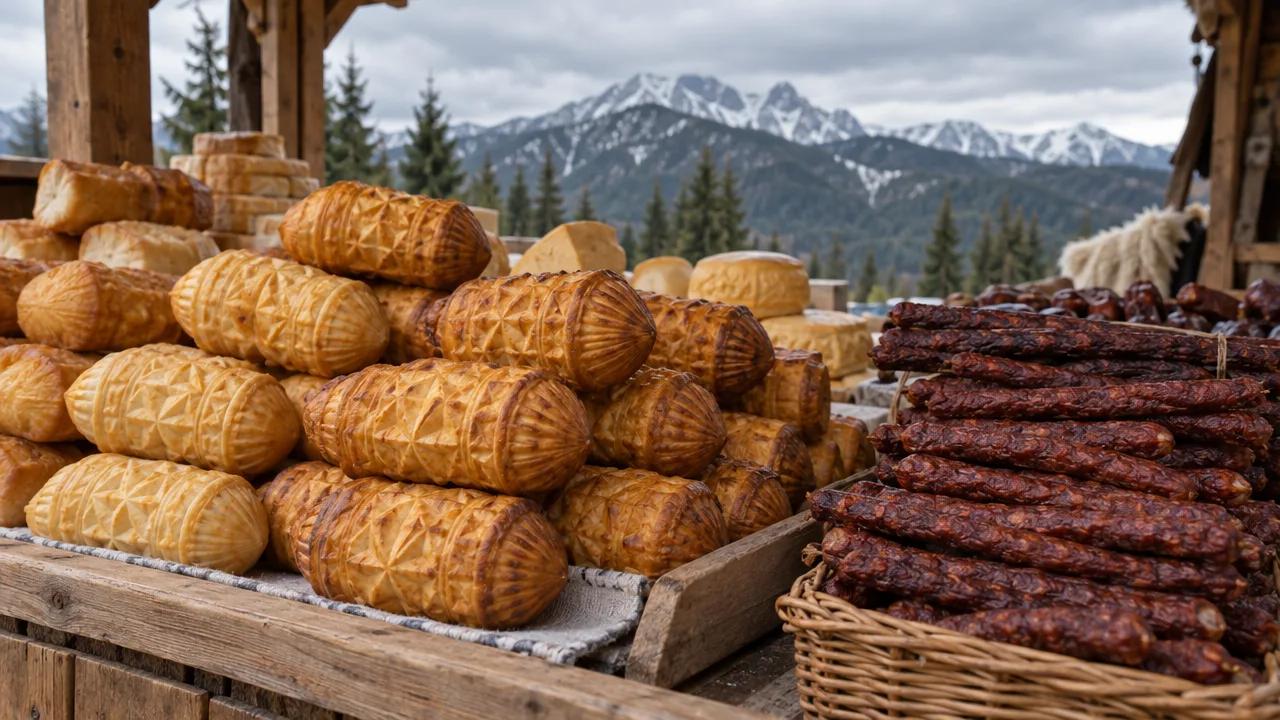
Hungry? Highland restaurants (karczmy) serve grilled oscypek with cranberry sauce, kwaśnica sauerkraut soup and mountain lamb. For a cheaper lunch, try one of Zakopane's milk bars. Taking oscypek home? Read our guide to souvenirs from Poland first – meat and dairy cannot be taken into the UK.
Can you do both in one day?
Yes, but only with an early start and your own transport or a tour. A realistic plan:
| Time | |
|---|---|
| 6:00 | Leave Kraków |
| 8:30 | Palenica Białczańska; walk or e-bus towards the lake |
| 11:00 | Morskie Oko; lunch at the hut |
| 14:30 | Back at the car park |
| 15:30–18:00 | Zakopane: Krupówki and Gubałówka |
| 20:30 | Back in Kraków |
Without a car, it is easier to choose one – or to stay overnight in Zakopane and do Morskie Oko the next morning.
Where to stay in Zakopane
A night in Zakopane turns a rushed day trip into a relaxed one: you can be on the road to Morskie Oko before the buses from Kraków arrive, and see the mountains at sunset.
- The centre, around Krupówki – restaurants and buses on your doorstep, but lively and noisy at night.
- The quieter streets around Gubałówka and Kościeliska – traditional wooden guesthouses (pensjonaty), many with mountain views, a 10–20 minute walk from the centre.
- Kościelisko and Bukowina Tatrzańska – villages just outside town with open views of the Tatras; Bukowina has large thermal baths. Best if you have a car.
Book early for weekends, Christmas, New Year, the winter school holidays (ferie, January–February) and July–August, when Zakopane fills up.
Practical tips
- Shoes: the road to Morskie Oko is asphalt, but you will walk 16 km there and back. In late autumn and winter it can be icy – light crampons or spikes help.
- Weather changes fast in the mountains, and it is several degrees colder at the lake than in Kraków. See weather in Poland by month.
- Mountain rescue (TOPR): call 985 or 601 100 300, or 112. Rescue is free in Poland, but travel insurance that covers hiking is worth having for anything beyond the road to the lake.
- Cash: most places take cards, but the toilets on the trail, some stalls and parking attendants may want złoty – see money in Poland.
- Avoid Saturdays in July and August and the long weekends in May and November if you can; the road to the lake becomes a queue.
For other mountain and forest parks, see our guide to Poland's national parks.
Sources
- Tatra National Park (tpn.gov.pl) – park rules, entry tickets, e-bus tickets and parking reservations
- Radio Kraków: TPN raised ticket prices (March 2025) – 11 zł standard, 5.50 zł reduced, 55 zł weekly
- Wycieczki z planem: Morskie Oko from 1 September 2026 – shortened horse-cart route, e-bus routes, fares and timetable, parking
- Interia Motoryzacja: Electric buses return to Morskie Oko (2026) – fares, ticket sales, horses still the main transport
- Visit Zakopane: Getting to Zakopane – buses from MDA, journey times
- Polskie Koleje Linowe (pkl.pl) – Kasprowy Wierch cable car, named tickets
Prices and opening hours change – we re-check them regularly. Spotted something out of date? Let us know.