Places
The best beaches in Poland: a guide to the Baltic coast
Poland has one of the longest sandy coastlines in Europe: almost 500 kilometres of white beaches backed by dunes and pine forest, from the German border to the Vistula Spit. The water is cool, the summers are lively and the sand is some of the finest anywhere on the Baltic.
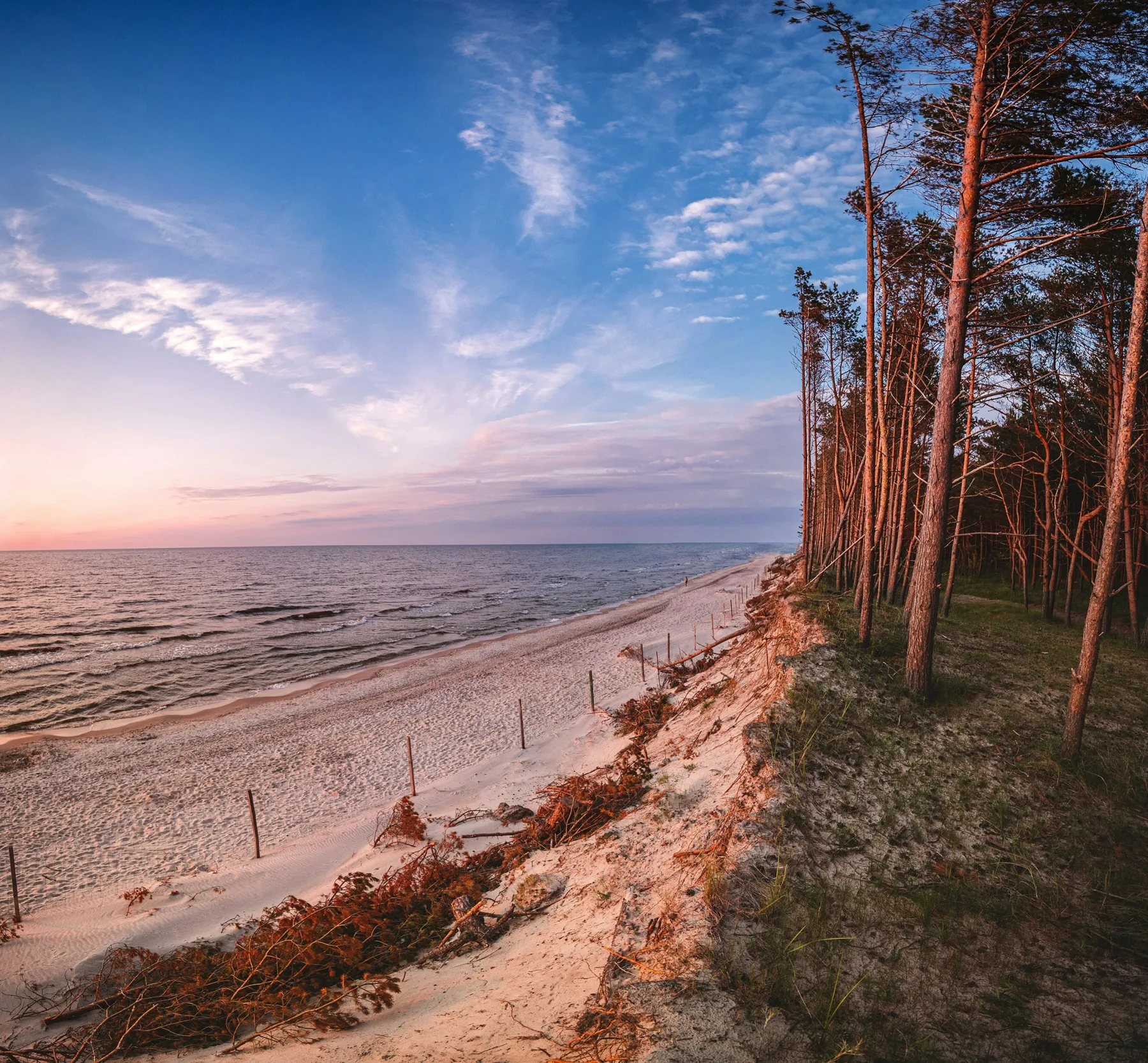
Ask a Pole where they spend the summer and many will say nad morzem – “by the sea”. The Baltic coast is Poland's favourite holiday destination: in July and August its resorts fill with families, its beaches with windbreaks and its promenades with waffle stands and fish fryers. Outside the peak weeks, the same beaches are wide, empty and wild.
Does Poland have beaches?
Yes – and good ones. Almost the whole Polish coast is sandy beach, often 30 to 100 metres wide, with dunes and pine forests behind it and very few rocks. There are lively resorts, quiet villages, a 35-kilometre sand peninsula, moving dunes like a small desert, and cliffs on the island of Wolin. What Poland does not have is warm water: the Baltic is a cool, brackish sea.
Crowded resorts, empty beaches
In July and August the beaches in the big resorts – Sopot, Kołobrzeg, Międzyzdroje, Władysławowo – are packed: walls of windbreaks, music from beach bars, ice-cream sellers and fish fryers, and not much room to lay a towel. It can be lively and fun, but also loud.
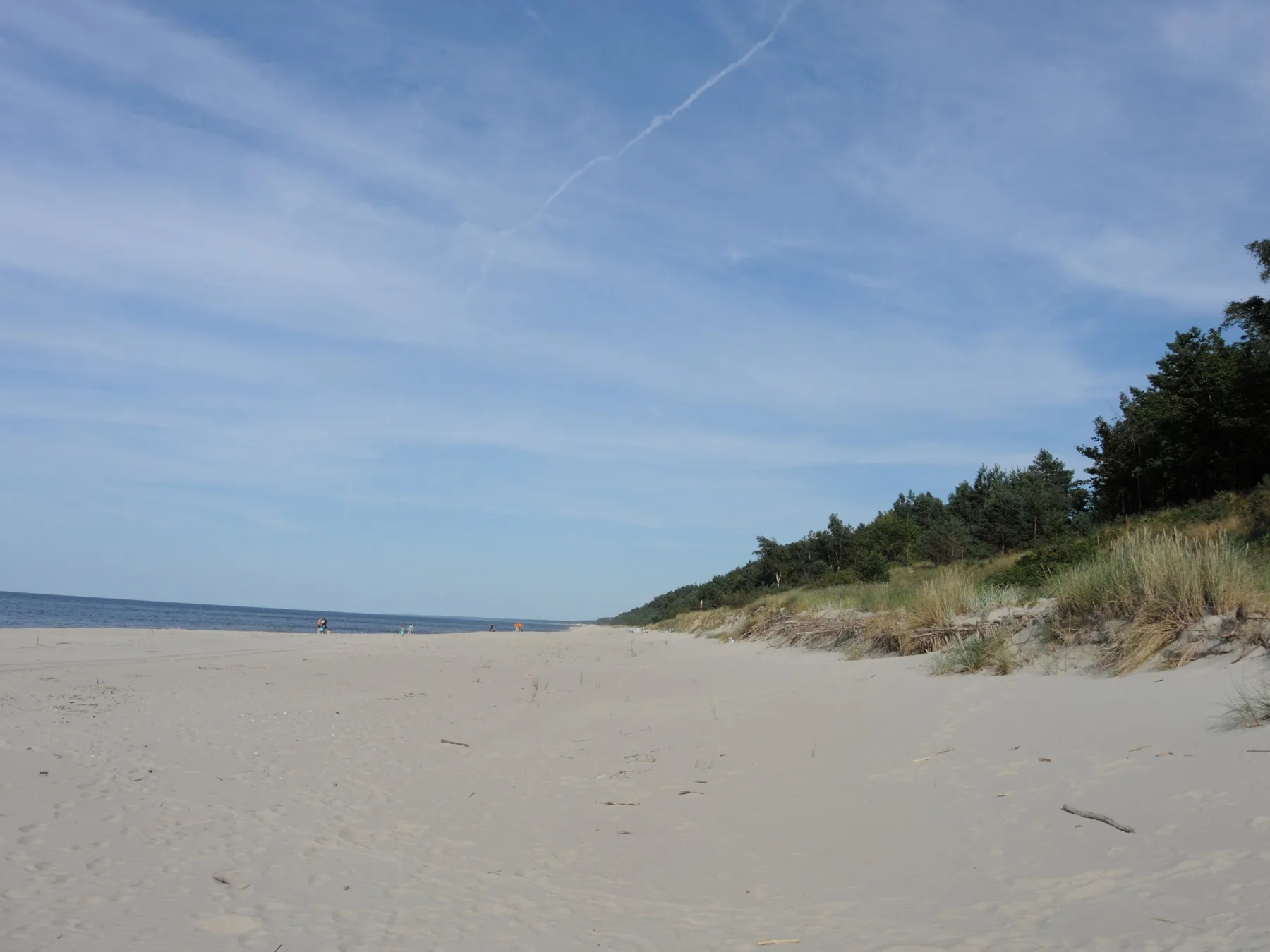
The good news is that the Polish coast is long and the crowds are concentrated. Walk ten minutes along the shore from the main beach entrance, or choose a smaller village – on the Hel Peninsula, around Łeba, on the Vistula Spit or between the bigger resorts – and you will often have a wide, quiet beach almost to yourself, even in high summer.
The Baltic coast on a map
- 1Świnoujście
- 2Międzyzdroje
- 3Kołobrzeg
- 4Darłowo
- 5Ustka
- 6Łeba
- 7Dębki
- 8Jastarnia & Jurata
- 9Hel
- 10Gdynia
- 11Sopot
- 12Gdańsk
- 13Krynica Morska
The best beaches and seaside resorts
| # | Place | Best for | Getting there |
|---|---|---|---|
| 1 | Świnoujście | One of the widest beaches in Poland, spa promenade, walk to Germany | Train or ferry from Szczecin |
| 2 | Międzyzdroje | Lively resort, pier, cliffs of Wolin National Park | Train from Szczecin |
| 3 | Kołobrzeg | Spa town with a pier, lighthouse and long promenade | Direct trains from many cities |
| 4 | Darłowo | Quieter beach at Darłówko, castle in the old town | Train to Sławno, then bus |
| 5 | Ustka | Fishing harbour, promenade, family resort | Train via Słupsk |
| 6 | Łeba | Moving dunes of Słowiński National Park, long beaches | Train via Lębork (direct in summer) |
| 7 | Dębki | Wild, natural beach; popular with young people and surfers | Easiest by car |
| 8 | Jastarnia & Jurata | The Hel Peninsula: open sea on one side, a calm bay for kitesurfing on the other | Train, or summer ferry from Gdynia |
| 9 | Hel | The tip of the peninsula, seal centre, beaches on both sides | Train or summer ferry from Gdańsk, Gdynia or Sopot |
| 10 | Gdynia | City beach and Orłowo cliff and pier | City train (SKM) |
| 11 | Sopot | Poland's most famous resort and Europe's longest wooden pier | City train (SKM) from Gdańsk |
| 12 | Gdańsk | Long city beaches at Brzeźno, Jelitkowo and Stogi | Tram from the centre |
| 13 | Krynica Morska | The Vistula Spit: high dunes, forest, sea on one side and lagoon on the other | Bus or car from Gdańsk |
Sopot, Gdańsk and Gdynia (the Tricity)
The easiest beach trip in Poland: the three cities of the Tricity (Trójmiasto) share 20 kilometres of sandy coast, linked by a fast city train. Sopot is the classic resort, with its 511-metre wooden pier – the longest in Europe – a lively pedestrian street and grand old spa hotels. Gdańsk has long, wide city beaches at Brzeźno, Jelitkowo and Stogi, a tram ride from the old town; Gdynia has a city beach and the cliff and small pier of Orłowo. All the Tricity beaches, with trams and trains, are in our guide to beaches in Gdańsk, Sopot and Gdynia; visiting in winter, see the Gdańsk Christmas market.
The Hel Peninsula
A 35-kilometre strip of sand, pine forest and fishing villages curving out into the sea north of Gdynia – the open Baltic on one side, the calm, shallow Bay of Puck on the other. Jastarnia and Jurata are popular for kitesurfing and windsurfing on the bay; Hel, at the tip, has a seal sanctuary run by the University of Gdańsk, old fortifications and beaches on both sides. In summer a ferry runs to Hel from Gdańsk, Gdynia and Sopot, and trains run along the peninsula – but the single road can be jammed on summer weekends.
Łeba and the moving dunes
West of Hel, the coast is wilder. Around Łeba, the Słowiński National Park protects huge shifting sand dunes – the highest, Łącka Góra, rises about 40 metres above a lake and moves a few metres every year. It feels like a small desert by the sea; walk, cycle or take an electric cart from Łeba, and finish on the beach behind the dunes. See our guide to Poland's national parks.
The western coast: Kołobrzeg, Międzyzdroje and Świnoujście
Kołobrzeg is a large spa town with sanatoriums, a pier and a long promenade, busy all year. Międzyzdroje on the island of Wolin combines a lively resort with the forested cliffs of Wolin National Park. Świnoujście, right on the German border, has one of the widest beaches on the coast – at its western end you can walk along the sand into the German resorts of the island of Usedom.
The Vistula Spit
East of Gdańsk, the Vistula Spit (Mierzeja Wiślana) is a long, narrow strip of forest and dunes between the sea and the Vistula Lagoon, with some of the highest dunes on the coast near Krynica Morska. It is quieter than the Tricity and the Hel Peninsula, and a good choice for long walks and empty beaches.
When to go and how warm is the water?
| Air (daytime) | Sea | |
|---|---|---|
| June | 18–22 °C | 13–17 °C |
| July – August | 20–25 °C, sometimes 30 | 17–20 °C, sometimes 22 |
| September | 16–20 °C | 15–17 °C |
- July and August are the main season: lifeguards on duty, everything open, warmest water – and the biggest crowds and highest prices.
- June and September are quieter, cheaper and often sunny; the water is cool but swimmable on warm days.
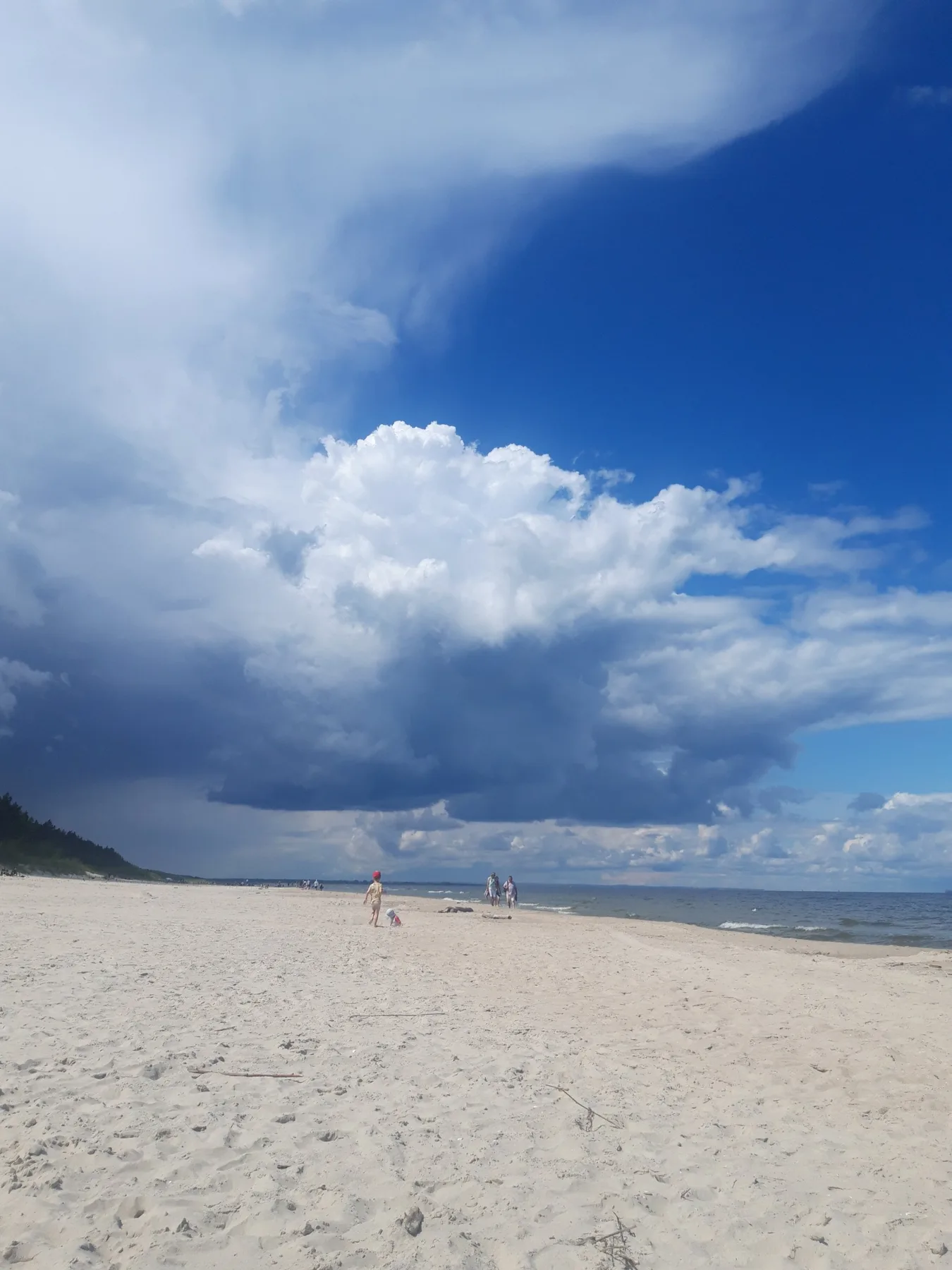
- Winter has a special beauty – empty beaches, storms and frozen spray – and the resorts and spa towns stay open. Amber washes up after winter storms: see Baltic amber.
More about the seasons in our guide to weather in Poland by month.
Beach life: what to know
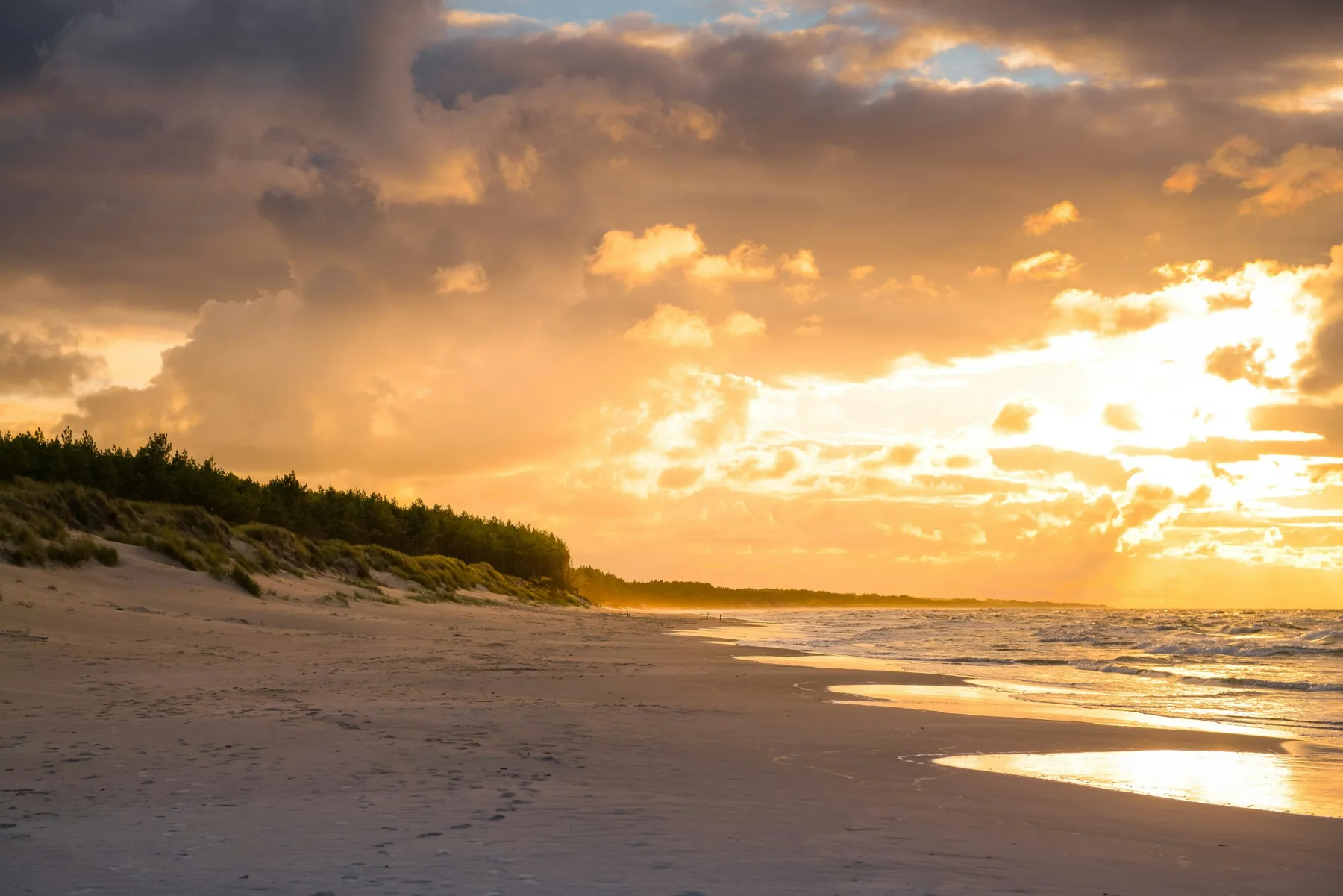
- Windbreaks (parawany): Poles bring colourful fabric screens to shelter from the wind and mark out their spot – you will see whole walls of them in July. You can buy or rent one in every resort.
- Lifeguarded beaches are marked with flags and usually staffed in July and August. A white flag means swimming is allowed, a red flag means it is forbidden; no flag means no lifeguard.
- Algae blooms (sinice): in hot summers, blue-green algae can close bathing areas, especially in the Bay of Gdańsk and the Bay of Puck. Check the official bathing water service (serwis kąpieliskowy) or ask the lifeguards.
- Dunes are protected: use the marked paths; walking on or sitting in the dunes is forbidden and can be fined.
- Alcohol on the beach is generally not allowed, as in other public places.
- Food: every resort has fried fish (smażalnia ryb) – check whether prices are per 100 g – waffles with whipped cream (gofry), ice cream and corn on the cob.
Getting to the coast
- From Warsaw: fast trains to Gdańsk take about 2.5–3 hours; in summer, direct trains also run to Kołobrzeg, Łeba, Hel and Świnoujście.
- From Kraków: trains to Gdańsk take about 5–6 hours; a flight to Gdańsk takes about an hour. Staying in Kraków? The city has its own lakeside bathing areas – see beaches in Kraków.
- Gdańsk Airport is the main gateway to the coast, with flights from across Europe; Szczecin Airport serves the western coast.
- By car: the A1 runs from the south to Gdańsk; summer weekends bring heavy traffic on the roads to Hel and the smaller resorts. See car hire in Kraków.
Where to stay
Book early for July and August – resorts fill up, and many guesthouses prefer stays of a week. Outside the peak season, prices drop sharply and you can choose on the day.
Sources
- Polish Chief Sanitary Inspectorate (GIS): bathing water service – bathing areas, water quality and algae warnings
- Sopot city (sopot.pl): Sopot pier, 511 m
- Słowiński National Park (slowinskipn.pl): moving dunes, Łącka Góra
- University of Gdańsk: Hel Marine Station and seal sanctuary
- Institute of Meteorology and Water Management (IMGW): Baltic sea surface temperatures
Prices and opening hours change – we re-check them regularly. Spotted something out of date? Let us know.