What to bring home
Polish Christmas ornaments and folk art: what to buy and where
Poland has one of Europe's richest Christmas craft traditions. Hand-blown glass baubles painted by local artists, straw stars and chandeliers, gingerbread hearts and glittering Kraków nativity scenes make beautiful, very Polish gifts – if you know where to find the real thing.
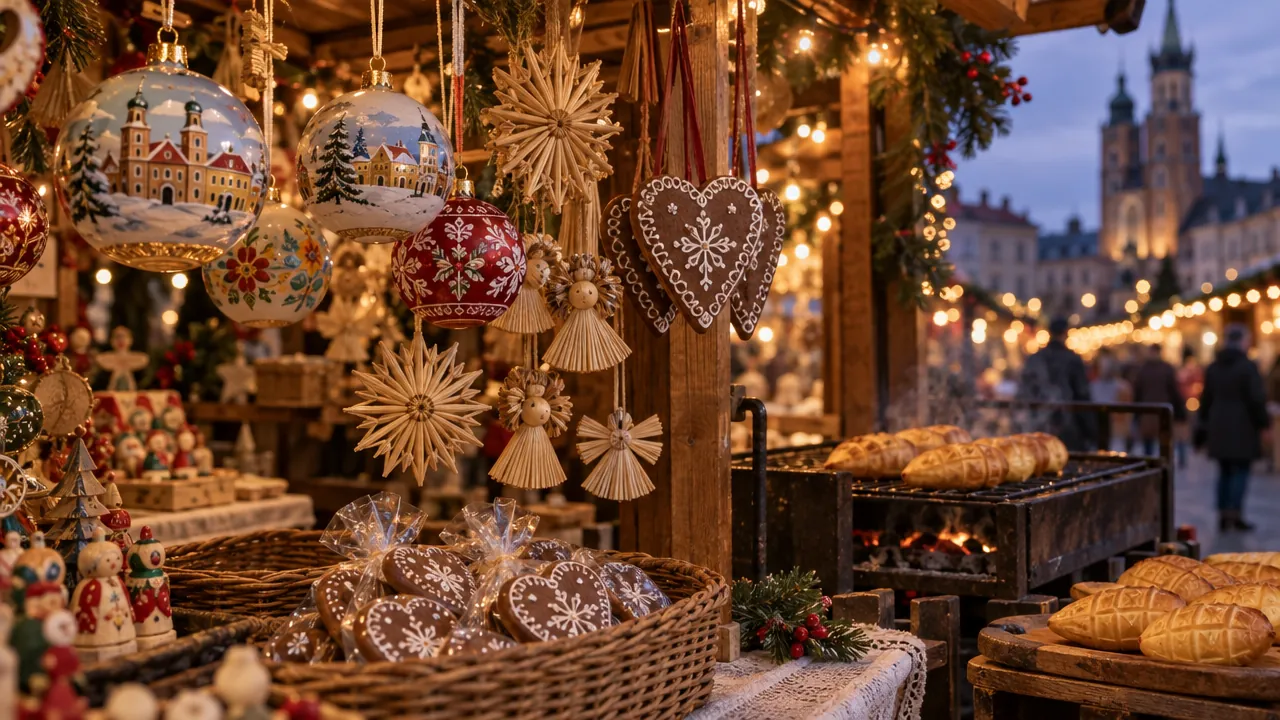
Christmas in Poland is a family affair, built around the Christmas Eve supper (Wigilia), the sharing of the wafer (opłatek) and a tree decorated with ornaments that often pass from one generation to the next. Many of those ornaments are still made by hand – and they make some of the most beautiful souvenirs you can bring home.
What to look for
| Craft | What it is | Price guide |
|---|---|---|
| Hand-blown glass baubles (bombki) | Mouth-blown glass, silvered inside and painted by hand – balls, birds, figures, folk patterns | from about 20–40 zł for simple pieces to 100–250 zł for artistic ones |
| Straw ornaments | Stars, angels and the traditional hanging pająk (“spider”) chandelier | a few złoty to 100 zł+ for a large pająk |
| Paper cut-outs (wycinanki) | Symmetrical, colourful folk paper cuts from Łowicz and Kurpie | 10–80 zł |
| Gingerbread (pierniki) | Iced hearts, stars and figures, from Toruń and elsewhere | 5–30 zł |
| Kraków nativity scenes (szopki) | Glittering miniature churches built of foil, card and wood | from about 50 zł for small ones to thousands for competition pieces |
| Wooden toys and figures | Carved angels, birds, horses and Nativity figures | 20–200 zł |
Prices are a rough guide – they vary with size, detail and where you buy.
Hand-blown glass baubles
Poland is one of Europe's main producers of hand-made glass Christmas ornaments, and many are exported to the US and Western Europe, where they cost several times more. Each bauble is blown from a glass tube, coated inside with silver, dipped in colour and then painted by hand – with flowers, folk patterns, snow scenes or glitter – before getting its metal cap.
How to tell a hand-made bauble:
- It is light and thin, with a slightly uneven shape; mass-produced plastic or machine-made glass is perfectly regular.
- The painting has small brush marks and variations – no two are identical.
- A sticker or label often says “hand made in Poland” and may name the workshop.
- Very cheap “glass” baubles sold in sets of 20 are rarely hand-made.
Look for folk-inspired designs – Łowicz flowers, Kraków costumes, Zakopane patterns – for a souvenir that is clearly Polish.
Straw, paper and wood
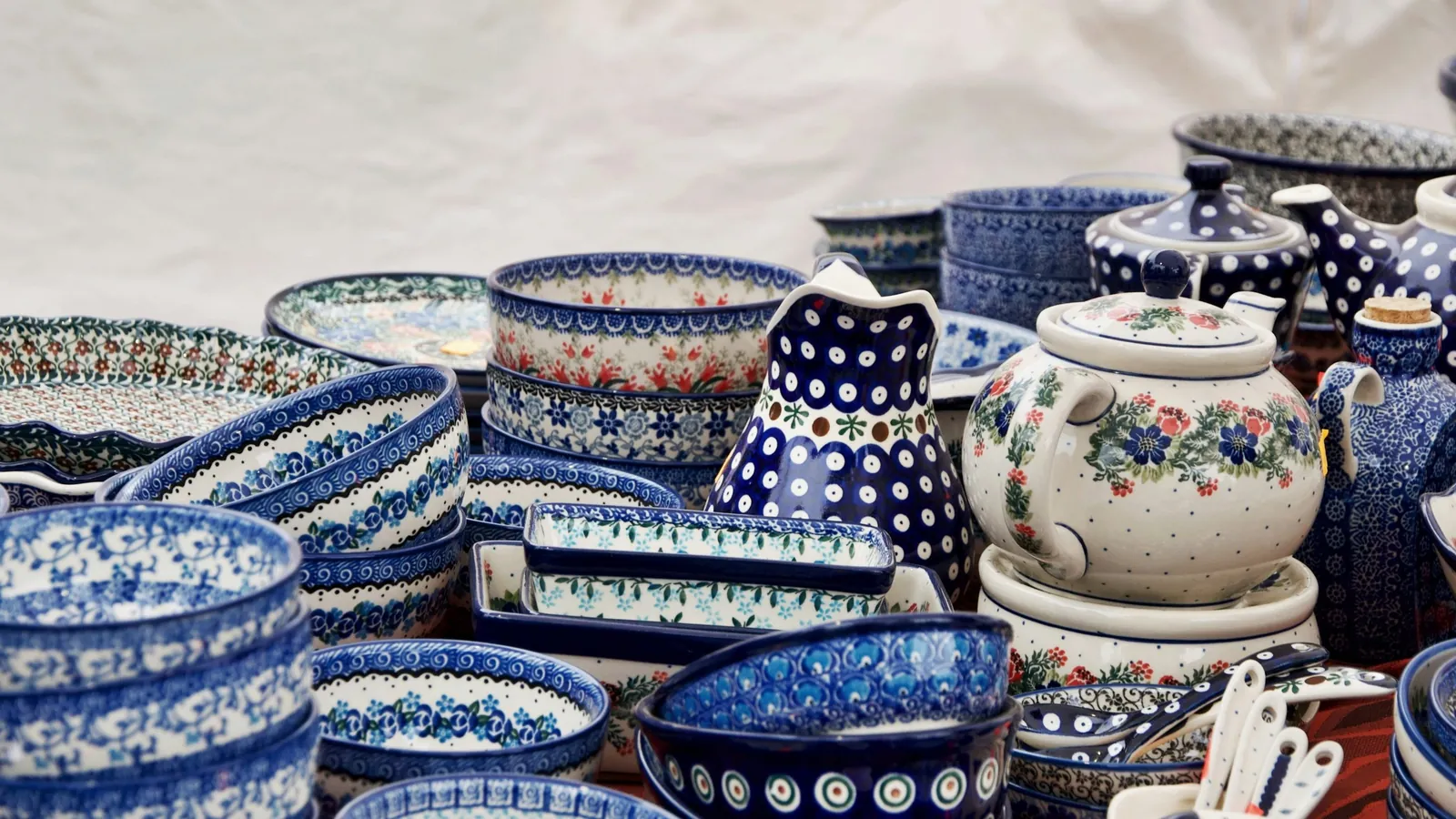
The oldest Polish Christmas decorations were made from what was at hand in the countryside: straw, coloured paper, eggshells and wood. Straw stars and angels, the elaborate hanging pająki (straw and paper “spiders”), colourful wycinanki paper cuts and carved wooden figures are light, cheap and easy to pack – and still made by folk artists today. See our guide to souvenirs from Poland for more folk crafts.
Kraków nativity scenes (szopki)
Kraków's szopki are unlike nativity scenes anywhere else: tall, glittering miniature churches inspired by the city's own landmarks – St Mary's spires, Wawel's domes, the Cloth Hall – built from card, foil and wood, with the Holy Family surrounded by figures from Polish history and legend. The tradition was added to UNESCO's list of the Intangible Cultural Heritage of Humanity in 2018.
Every year, on the first Thursday of December, makers bring their szopki to the foot of the Adam Mickiewicz Monument on the Main Square for a competition, and the best are then exhibited at the Museum of Kraków over the winter. Small szopki are sold at the Christmas market and in folk-art shops – a unique Kraków souvenir. See Kraków in December.
Where to buy
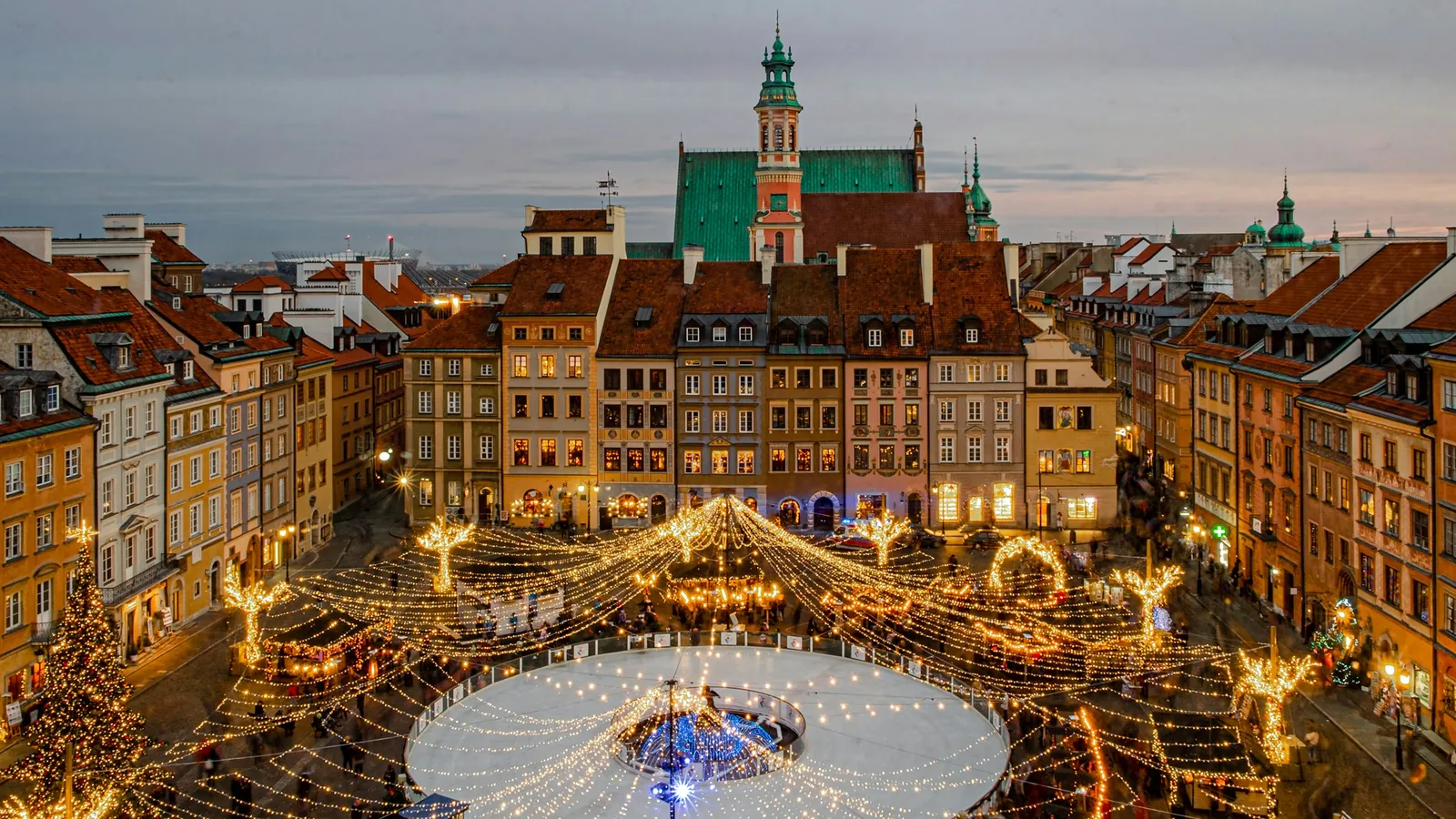
- Christmas markets – Kraków, Wrocław, Gdańsk, Warsaw and other cities have stalls with hand-painted baubles, straw ornaments and gingerbread from late November. See Christmas markets and gifts, the Wrocław Christmas market and the Gdańsk Christmas market.
- Cepelia shops – specialists in Polish folk art for decades, with branches in several cities.
- The Cloth Hall (Sukiennice) in Kraków – a mix of real crafts and mass-produced souvenirs; look carefully.
- Specialist ornament shops, such as Bombkarnia on Emilii Plater Street in Warsaw, which sells hand-painted glass baubles by Polish artists and ships worldwide.
- Online – many Polish workshops and shops sell directly and ship abroad; look for “hand made in Poland” and the name of the maker.
Getting them home
- Glass baubles belong in your hand luggage: wrap each one in tissue or a sock and pack them in a rigid box. Shops often provide boxes with individual compartments – ask.
- Straw and paper decorations are light but crush easily – pack them flat, between books or in a box.
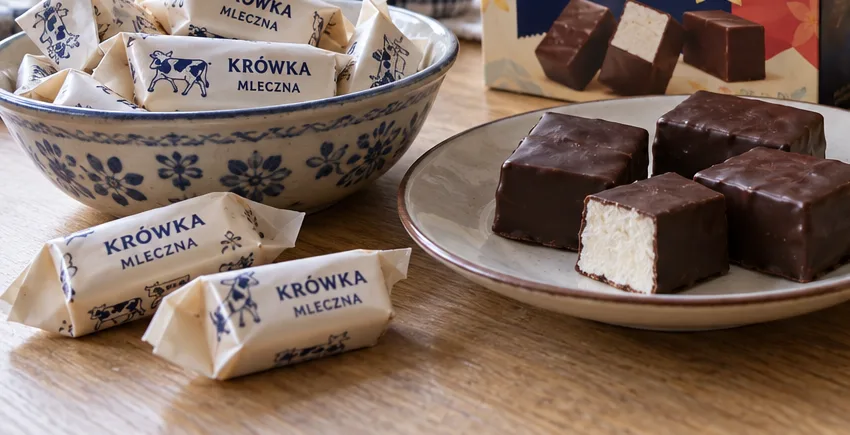
- Gingerbread travels well; see Polish sweets.
- Non-EU visitors can reclaim VAT on larger purchases – see Tax Free in Poland.
Sources
- UNESCO: Nativity scene (szopka) tradition in Kraków – inscribed on the Representative List of the Intangible Cultural Heritage of Humanity, 2018
- Museum of Kraków: annual Kraków nativity scene competition (first Thursday of December)
- Bombkarnia (bombkarnia.pl): hand-made, hand-painted glass baubles by Polish artists; worldwide shipping
Prices and opening hours change – we re-check them regularly. Spotted something out of date? Let us know.